

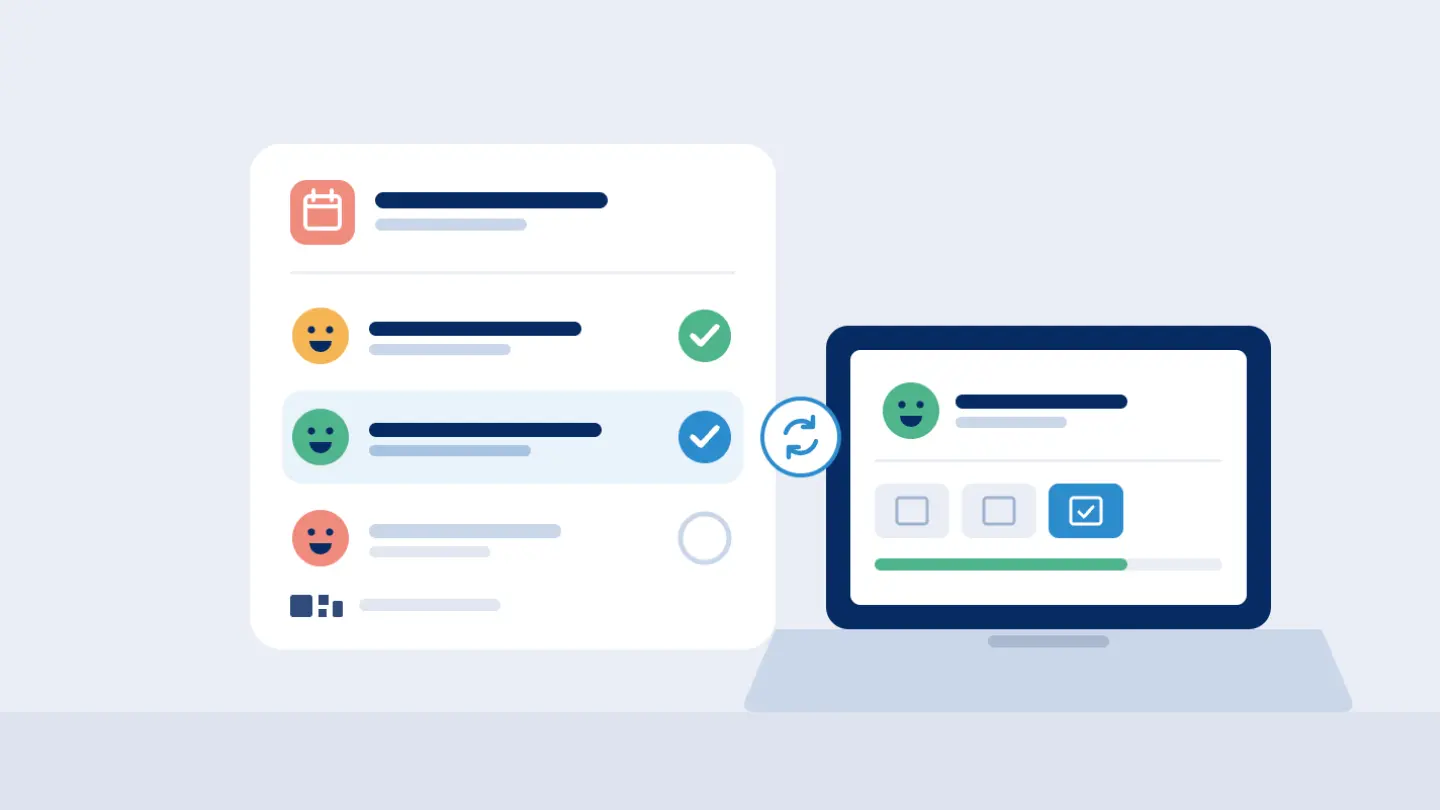
Events are often among the most valuable services an association provides. Conferences, training sessions, webinars, awards and networking opportunities give members practical reasons to engage with the organisation and renew their membership.
Yet the systems used to manage those events can create a surprising amount of extra work. Registrations sit in one platform, payments in another, communications in an email system and member information in the CRM or membership database. Staff then have to move information between systems, reconcile inconsistent records and work out what an event actually tells them about member engagement.
Choosing event management software for associations should therefore involve more than comparing ticketing, registration and check-in features. The strongest event management software connects registrations, payments, communications, attendance and follow-up with the organisation’s existing membership data. This reduces administration, creates a more consistent member experience and turns each event into a useful source of engagement insight.
Standalone event tools can manage many parts of an event effectively. The limitations often appear where the event meets the wider membership operation. Here are five ways a separate system can fall short for associations.
1. Standalone tools can make event communications less relevant
A standalone event platform knows who has registered, but it may not know enough about each person’s wider relationship with the association. Membership status, grade, professional interests, previous activity and organisational relationships may all sit elsewhere. Without that context, associations can find themselves relying on generic messages, manually prepared lists and repeated data exports to reach the right people.
Promoting an association event rarely means sending the same invitation to everyone.
Different members may receive access to different events, sessions or ticket prices. Some communications may be relevant only to a particular membership grade, professional interest, committee, location or stage of the member journey. Organisational members may also need to reserve several places before confirming the names of individual attendees.
When event and membership information is held in separate systems, producing those audiences becomes more complicated. Staff have to export member lists, remove ineligible contacts, match them against previous registrations and upload the final audience into another platform.
That process takes time and creates opportunities for information to become outdated. Someone who has renewed, changed membership type or updated their preferences may still be treated according to the information contained in the exported list.
Connected event management software can use current membership information to support more relevant promotion and communication. An association can identify the appropriate audience, make particular ticket types available to eligible members and use existing information to reduce the amount of data people must enter again.
The connection remains valuable after registration. Confirmations, reminders, joining instructions and follow-up can reflect both the event booking and the person’s wider relationship with the association.
This is one of the advantages of managing events within a broader association management platform. Event communications can be informed by current member records, rather than relying on another exported and gradually ageing contact list.
2. Separate event systems create more handovers and administration
Standalone software may manage the event itself efficiently while still creating work at every point where information needs to move into or out of it. Member details must be checked, eligible prices confirmed, payments reconciled and attendance returned to the main membership record. The event platform solves one part of the process, but staff remain responsible for connecting it with everything around it.
The event itself may last a few hours or a few days. The administration surrounding it can continue for weeks.
Every booking creates information that must be collected, checked and maintained. There may be ticket changes, guest details, dietary requirements, accessibility requests, invoices, cancellations, waiting lists, refunds and questions from attendees. If the event is managed separately from the membership system, staff must also determine whether each attendee is an active member and whether they have received the correct access or price.
After the event, attendance needs to be transferred back into the member database. Payment information might be reconciled separately, while communications and feedback remain in other tools.
Integrations can move some of this information automatically, but they still need to be configured, monitored and maintained. A change to one system can affect the connection, while mismatched fields or duplicate records may require manual intervention.
When event management sits within the wider membership platform, many of these handovers disappear. Member details inform the booking process. Payments and invoices can remain connected with the relevant record, and confirmed attendance can update the member’s activity history.
The experience of the Australian Anthropological Society illustrates the practical difference this can make. The Society previously used separate systems for membership, conference registrations, abstract management and payments. Moving these processes into an integrated platform simplified day-to-day administration and made the organisation less dependent on individual knowledge. You can read the full Australian Anthropological Society case study.
Connected software does not remove the work involved in running a successful event. It removes much of the unnecessary work created by disconnected systems.
For a membership team managing regular webinars, training sessions, conferences and networking events, those savings can accumulate across the year. This is why operational efficiency matters strategically, particularly for associations whose teams are already being asked to deliver more with limited resources.
Want to see what a connected event process looks like?
Explore VeryConnect’s event management software for associations and see how registration, ticketing, payments, communications, QR check-in and reporting can work alongside your member records.
3. Attendance can become isolated from wider engagement data
A standalone event platform can report how many people registered or attended. What it may not show is whether those people are active members, nearing renewal, involved elsewhere in the association or becoming less engaged over time. The event data exists, but its meaning is limited because it cannot easily be viewed as part of the complete member relationship.
Knowing how many people attended an event is helpful. Knowing who attended, what else they engage with and how that behaviour changes over time is considerably more valuable.
Event participation can provide an important signal about the strength of the member relationship. Regular attendance may indicate that a member is receiving value from the organisation. A gradual reduction in participation may suggest that their interests have changed or that they are becoming less engaged.
That insight is difficult to use when registration and attendance data remain in a standalone event platform. Staff may be able to report on ticket sales or attendee numbers, but they cannot easily compare participation with membership type, renewal history, communications, committee involvement or other activity.
Connected event and membership data creates a more complete view.
An association could use it to:
- Identify members who regularly attend training or networking events
- Recognise people who register but repeatedly fail to attend
- Find active members who may be suitable contributors, speakers or volunteers
- See which membership groups are underrepresented at events
- Understand which activities attract prospective members
- Identify previously active members whose participation has declined
- Inform renewal and re-engagement communications
- Demonstrate the services and opportunities delivered to members
Attendance should not be treated as a definitive measure of satisfaction. Some highly engaged members may make use of other benefits instead. It’s still a meaningful part of the evidence, particularly when considered alongside the rest of the member relationship.
A connected CRM for membership organisations can bring event participation together with communications, payments and other activity. Event data becomes much more useful when it contributes to that complete picture rather than remaining an isolated set of booking records.
4. Separate systems can fragment the member experience
Every additional event platform introduces another place for members to register, enter information, make payments or find joining instructions. Even when the systems are technically connected, members may still encounter additional accounts, repeated forms, inconsistent branding or communications that fail to recognise what they have already done. The internal technology setup becomes visible to the member through unnecessary friction.
Members experience the association as one organisation. They don’t necessarily understand if its website, membership system, event platform, payment process and communications all operate separately.
Disconnected systems can make that internal structure visible in frustrating ways. Members may have to create another account, enter information the association already holds or move between differently branded pages. They may receive a generic invitation after already registering, or be asked to prove their membership to access a member rate.
The same fragmentation can continue on the day of the event. Attendance may be recorded manually and updated later, which can delay certificates or continuing professional development records.
Connected event management software for associations can provide a more consistent journey from promotion through to follow-up.
Members can discover relevant opportunities, use their existing information to register, receive the correct ticket options and access joining instructions in a familiar environment. QR code check-in can confirm attendance, and that attendance can contribute to the member’s activity or CPD record without someone entering it again afterwards.
This matters because the event experience does not begin when a speaker takes the stage. It begins when the member first discovers the opportunity and continues through registration, payment, preparation, attendance and follow-up.
The relationship can continue after the event too. A connected membership community platform can give members opportunities to continue discussions, access resources and build connections beyond the scheduled session.
Every unnecessary login, repeated form and conflicting message adds friction to the journey. Bringing events into the wider member environment helps the association deliver a more consistent experience.
5. The true cost and performance can be harder to see
The subscription price of standalone event software is easy to identify. The cost of connecting it with the CRM, payment provider, website, email platform and reporting process is much less obvious. Associations can therefore underestimate both the operational cost of the system and the staff time required to turn its event data into useful organisational insight.
An association may also need to pay for integrations, payment tools, email services, website functionality, reporting software or technical support. Staff time is then spent maintaining connections, resolving data differences and producing reports from several sources.
The cost, therefore, is not simply the price of the event platform. It’s the total cost of operating the complete event process.
That should include:
- Software subscriptions
- Integration and connector costs
- Implementation and configuration
- Internal administration
- Manual data transfer and reconciliation
- Technical maintenance
- Reporting effort
- Training across multiple systems
- The operational impact of incomplete or unreliable data
Connected systems can also improve performance reporting. Rather than looking only at ticket sales and attendance, an association can examine how events contribute to member participation, professional development and the wider relationship.
This makes it easier to answer more meaningful questions. Are events reaching the members they were designed for? Are attendees becoming more involved with the association? Which parts of the programme appear to deliver the greatest member value? Are non-member attendees progressing towards membership?
A standalone event system may report effectively on the event. A connected membership platform can help the association understand the event’s place within the complete member journey.
Price still matters, but it needs to be considered alongside functionality, implementation, integrations and the work the system creates or removes. VeryConnect publishes its membership management software pricing to give organisations a clearer indication of the likely investment at different levels of complexity.
Does every association need connected event management software?
Not necessarily.
A standalone event platform may be entirely appropriate for an organisation that runs occasional public events, has a simple membership model or doesn’t need attendance to contribute to a wider member record. It may also work where the organisation already has the technical capacity to build and maintain reliable integrations with its central CRM or membership system.
The case for a connected platform becomes stronger in the following circumstances:
Events are an important membership benefit. If conferences, training or networking are central to the value of membership, event activity needs to be understood as part of the member relationship. Holding it separately makes it harder to see whether members are using a core benefit, which audiences are being served and where engagement may be declining.
The organisation runs a regular programme of activities. A standalone system may be manageable for one or two events each year. As the number of webinars, courses, conferences and meetings grows, repeated exports, imports and reconciliations create a recurring administrative burden. A connected platform allows processes and information to be reused across the full programme.
Members and non-members receive different access or prices. The event system needs current membership information to decide who is eligible for particular tickets, rates or sessions. Without a dependable connection, staff may have to upload member lists, verify status manually or correct bookings made at the wrong price.
Individual and organisational memberships must both be supported. One organisation may hold the membership while several employees attend its events. A connected platform can preserve the relationship between the member organisation, its nominated contacts and individual attendees. A standalone booking system may treat each attendee as an unrelated contact, losing important organisational context.
Events contribute to CPD or professional accreditation. Registration alone is not enough when attendance must result in CPD points, hours, certificates or updates to a professional record. Connecting check-in with the member profile allows confirmed participation to flow into that record without staff transferring it manually after every event.
Attendance is an important engagement measure. If event participation informs retention, re-engagement or programme development, it must be viewed alongside renewals, communications and other member activity. Isolated attendance figures show how an event performed, but they do not show what that activity means for the wider member relationship.
Staff currently transfer data between several systems. Repeated exports and uploads are evidence that the underlying process is fragmented. They consume staff time, introduce version-control problems and increase the likelihood of incomplete, duplicated or outdated records. A connected platform reduces those handovers by allowing the same information to support registration, communication, payment and reporting.
Reporting requires information from several sources. If every useful report begins with combining spreadsheets from the event platform, CRM, payment provider and email system, the organisation does not have a reliable single view. Connecting those processes makes reporting more consistent and reduces the time spent preparing the data before anyone can analyse it.
Members expect a single, consistent digital experience. Separate systems often mean additional accounts, repeated forms, inconsistent branding and different places to find information. A connected platform allows events to sit within the wider member environment, so the digital experience reflects the fact that members see the association as one organisation.
The right choice depends on the role events play within the association. If they are closely connected with membership, professional development and engagement, the technology supporting them should probably be connected too.
What should associations look for in event management software?
Before comparing suppliers, map the complete event process from initial promotion through to post-event reporting. This makes it easier to distinguish an attractive feature from functionality that supports the way the organisation actually works.
Questions to ask include:
- Can the system identify members, non-members and contacts within member organisations?
- Can ticket availability and pricing reflect membership type?
- Can members book guests or reserve multiple places?
- Can attendees update their own booking information?
- Does the system support card payments and invoicing?
- Can it manage capacities, cancellations and waiting lists?
- Can confirmations and reminders use current member and booking information?
- Can attendees be checked in using individual QR codes?
- Does confirmed attendance update the member record?
- Can attendance contribute to CPD history or certificates?
- Can staff report on event participation alongside other member activity?
- Which integrations are required?
- Who is responsible for maintaining those integrations?
- What is the complete cost over three to five years?
- How will the platform adapt as the event programme changes?
The objective is not to find the platform with the longest feature list. It’s to find the system that supports the association’s complete event and membership model without creating unnecessary operational gaps.
How VeryConnect brings event and membership management together
VeryConnect is a connected membership management platform with event functionality built into the wider membership environment.
Associations and professional bodies can manage event pages, registrations, ticket types, payments, invoices, attendee communications, waiting lists, guest bookings, QR check-in, CPD and reporting alongside their membership records.
Because the information is connected, an event is not reduced to a separate list of attendees. Registration and attendance become part of the wider member relationship, supporting better communication, clearer reporting and a more complete understanding of engagement.
VeryConnect is configured around the organisation’s membership structure, event processes and operational requirements. Its team supports customers through scoping, data migration, configuration, training and launch. You can learn more about how the VeryConnect implementation process works.
The technology should reflect the member experience
Members do not experience an association’s events, communications, payments and professional development as separate systems. They experience them as different parts of one relationship.
Event management software for associations should reflect that.
Connecting event activity with membership data can reduce administration, improve communication and make participation easier to understand. More importantly, it helps the association see each event not as an isolated transaction, but as part of the value it provides throughout the member journey.
Ready to reduce the work surrounding every member event?
Book a tailored demo to explore how your association could connect registration, payments, communications, check-in, attendance, CPD and member insight in one platform.