

Understanding the difference between a membership CRM and a membership management platform starts with knowing what you need the technology to do.
If you’re a small business or organisation with limited capacity and primarily need somewhere to store contact details, record interactions and manage relationships, a CRM may provide everything you need. It can replace spreadsheets, create a more reliable database and give your team a clearer view of the people with whom it works.
For a membership organisation with more sophisticated requirements, however, a CRM is not enough to manage modern membership needs. Membership teams also need to process applications and renewals, collect payments, run events, communicate with different member groups, provide self-service, support professional development and help members build relationships with one another. They need to understand not only who their members are, but how they participate, whether they’re engaged and where the organisation is creating value.
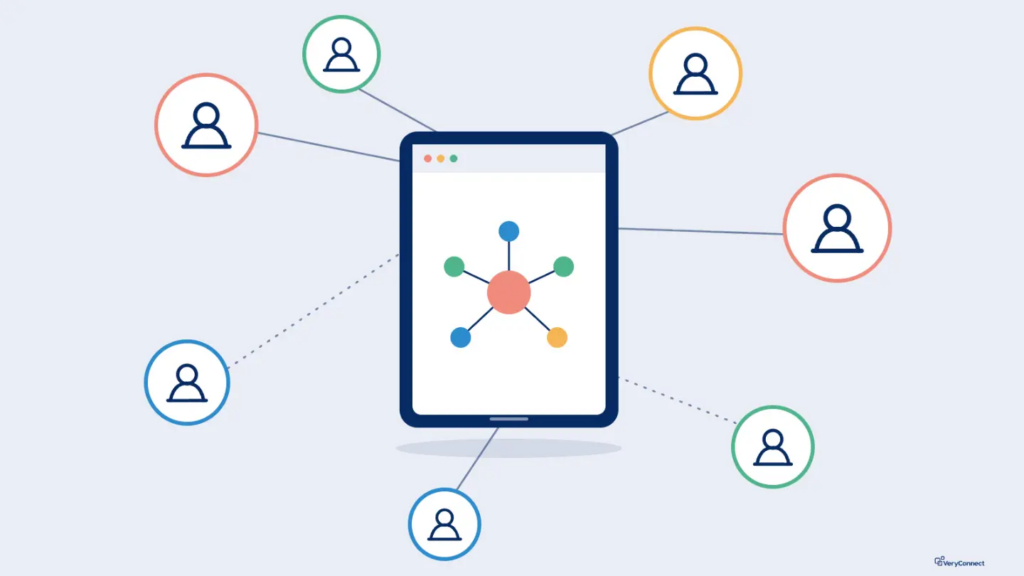
A good membership management platform is built to bring all the functionality required to manage membership into one place. It includes CRM capabilities, but connects them with the wider systems, processes and experiences that surround the member.
That makes a CRM one component of a membership management platform, rather than an equivalent alternative. If your requirements stop at contact management, a CRM may be enough. If you need to manage the complete operation and experience of membership, a purpose-built membership management platform is the more appropriate choice.
What's the difference between a membership CRM and a membership management platform?
A membership CRM primarily stores member information and helps an organisation manage its relationships. A membership management platform includes CRM functionality but also connects it with the processes and experiences required to deliver membership, including joining, renewals, payments, communications, events, self-service, community and engagement tracking.
A CRM manages relationships. A membership platform manages membership
CRM stands for customer relationship management. These systems were developed to help businesses organise customer information, track interactions and support activities such as sales, marketing and customer service.
A CRM can provide a clear record of each member. Depending on the product and its configuration, this might include:
- Contact details and communication preferences
- Membership type and status
- Joining and renewal dates
- Payment history
- Qualifications or accreditations
- Previous communications and enquiries
- Relationships between individuals and organisations
These capabilities matter. Accurate, accessible member information is the foundation of effective membership management. But the member record is only the foundation. It’s not the complete membership experience.
A membership management platform builds on that foundation by providing the tools required to run the organisation and deliver value to members. Joining, renewals, payments, communications, events, community, mentoring and member self-service can all operate around the same information.
Instead of using the CRM as a database and building the rest of membership around it, the organisation gains a platform in which the CRM is already connected to the work it needs to support.
The difference becomes clear when you look at the member journey
Consider what happens when someone joins a professional association.
The organisation needs to capture their application, process a payment, assign the correct membership type and provide access to relevant resources. It may then invite the new member to events, introduce them to appropriate groups, recommend professional development opportunities or match them with a mentor.
As that person participates, the organisation should be able to understand how their relationship is developing. Event attendance, email interaction, portal logins, payments, community participation and use of member services can all provide useful evidence of engagement.
A CRM can store some of this information, but only if the relevant activities happen within the CRM or data is transferred into it from elsewhere. The organisation therefore needs to add, connect and maintain the systems through which the wider member experience is delivered.
A membership management platform is designed to support the journey itself. Member-facing activity and internal administration operate around the same records, making it easier to deliver a consistent experience and understand what’s happening across the relationship.
This is the fundamental difference. A CRM records membership, while a membership management platform helps the organisation deliver it.
A CRM often becomes the centre of a much larger technology stack
When a CRM does not provide all the functionality a membership organisation needs, the usual response is to add other products.
For example, the organisation may need to organise an event. It introduces a standalone event management system and then integrates it with the CRM. The same process is repeated when the team needs a content management system, payment provider, community tool, member portal, mentoring application or reporting system.
Each product may perform its particular role well. Together, however, they can create a substantial technology ecosystem that the organisation must fund, integrate and maintain. What began as an investment in one central CRM gradually becomes a network of systems, suppliers and data flows.
This model can work, but it creates complexity that a membership management platform is specifically intended to reduce.
Integration doesn’t always create a genuinely connected experience
Software integrations can transfer information between products, but that doesn’t mean the systems operate as one coherent platform.
The organisation still needs to decide which system holds the authoritative information, which data should move between applications and how often it should update. Staff may need to resolve duplicate records, investigate failed transfers or combine several reports to understand what a member has actually done.
The experience can be fragmented for members too. They may encounter different interfaces, separate accounts and inconsistent processes as they move between joining, events, community activity and other services.
A connected membership management platform reduces these handoffs. Core membership activities take place within the same environment, using shared information and consistent processes.
When a member books an event, makes a payment, opens a communication or participates in the community, that activity can contribute directly to their wider membership record. The organisation does not have to reconstruct the relationship afterwards from several disconnected sources.
Membership platforms make day-to-day operations simpler
The benefits of a membership management platform aren’t limited to data. They affect how easily the organisation can operate.
In a disconnected technology stack, employees may need to move between several systems to complete one member task. They must understand which information belongs in each product, how the systems interact and what to do when the expected process does not work.
This creates a significant training and continuity burden. New employees need to learn multiple interfaces and the often undocumented rules that hold the technology stack together. When experienced staff leave, organisations can lose valuable operational knowledge about how data is transferred, where workarounds exist and which processes require manual intervention.
A membership management platform gives the team one core environment in which to work. Staff can manage records, payments, communications, events and member activity without repeatedly changing systems. New starters have fewer platforms and processes to learn, while managers have fewer suppliers, contracts and integrations to oversee.
This simplicity creates capacity. Time that would otherwise be spent navigating systems, transferring data or resolving inconsistencies can be redirected towards supporting members and improving services.
Membership platforms provide a better foundation for member engagement
A CRM is designed to help an organisation manage its relationship with an individual. Membership organisations must also support the relationships members build with one another.
That distinction is particularly important for associations, professional bodies, societies and alumni organisations. Access to peers, shared expertise, professional networks and a sense of belonging can be among the most valuable reasons to become and remain a member.
A contact database can’t create those relationships. Even if a CRM records that people share a profession, location or interest, it doesn’t necessarily give them a way to find, contact or support one another.
A membership management platform can make community part of the wider membership experience through capabilities such as:
- Searchable member directories
- Interest or regional groups
- Direct member messaging
- Discussion forums
- Knowledge sharing
- Structured mentoring
- Member contributions and participation
Because this activity happens within the wider platform, the organisation can understand how community participation relates to engagement. Members gain meaningful ways to connect, while staff gain a fuller picture of the value being created.
Community is, therefore, not simply another feature to add to a CRM. It represents a different understanding of what membership technology is for.
Membership platforms create a more useful view of engagement
A CRM may tell an organisation whether someone is an active member, when they last renewed and which communications they received. That information is valuable, but it doesn’t necessarily reveal the health of the relationship.
Two people can both appear as active, paying members while having very different experiences. One may attend events, open emails, participate in discussions and regularly use member resources. The other may continue paying but have little meaningful contact with the organisation.
When activity is spread across multiple systems, spotting that difference can require data exports, custom reporting or manual analysis. By the time disengagement becomes visible through non-renewal, the opportunity to intervene has passed.
A connected membership management platform brings those interactions together. It helps teams identify who is participating, which services are creating value and where engagement is beginning to decline.
This turns member data into something operationally useful. Instead of simply reporting what’s already happened, the organisation can use the information to decide where attention is needed next.
A membership platform can reduce total cost of ownership
A CRM may initially appear to be the more affordable option, particularly when entry-level packages are inexpensive or free. However, the licence price of the central database is only one part of the eventual cost.
As the organisation adds functionality, it may also find itself paying for:
- Additional CRM modules or higher product tiers
- Event, email, community and payment systems
- Website and member portal technology
- Integration development and maintenance
- Implementation partners or specialist consultants
- Data migration and configuration
- Staff training across multiple systems
- Ongoing technical support
- Internal administration and manual data reconciliation
- Future changes when requirements or products evolve
The best membership management platforms bring many of these capabilities into one product and implementation. This doesn’t automatically make every platform cheaper than every CRM, but it creates a much more efficient operating model and can significantly reduce the cost of assembling and maintaining the complete solution.
The correct comparison is not the price of one CRM against the price of one membership platform. It’s the total cost of providing all the functionality the organisation needs, keeping the systems connected and enabling staff to use them effectively over several years.
Comparing your current technology with a new platform? Use our total cost of ownership calculator to estimate what your software, integrations and internal administration are really costing your organisation.
Purpose-built doesn’t have to mean inflexible
Some organisations choose a general-purpose CRM because they assume it’ll provide more flexibility. They may worry that a membership management platform will force them to adopt fixed processes or pay for functionality they don’t need.
That concern is reasonable when evaluating rigid, one-size-fits-all products. But a configurable membership platform, like VeryConnect, offers a different model.
The organisation can select the functionality relevant to its needs and configure the platform around its membership types, payment rules, organisational structures and processes. It gains the advantages of technology already built for membership without having to commission a large custom development project.
This provides a practical middle ground. The organisation doesn’t have to accept inflexible software, but it also doesn’t have to build its membership operation from a general-purpose CRM and a collection of separate applications.
Implementation support is part of the solution
Selecting the right functionality is only one part of a successful technology project. The system also needs to be configured around the organisation, populated with reliable data and adopted by the people who will use it.
General-purpose CRM projects can require the organisation to translate membership requirements into a system that wasn’t originally designed around them. This may involve implementation partners, developers and extensive internal project management.
A membership platform provider already understands common membership structures and processes. The implementation can focus on how the organisation works, which functionality it needs and how existing data and processes should move into the new environment.
This reduces the burden on the internal team and makes it easier to reach a working outcome. It also provides continuity between what was promised during procurement and what’s delivered during implementation.
The value of supported implementation is not that someone turns the software on. It’s that the platform is configured, understood and usable in the context of the organisation’s real work.
What should you compare when choosing a membership CRM or membership management platform?
Not every product described as membership management software will provide the same level of functionality or connection. Organisations should test whether a supplier can demonstrate the complete member journey rather than relying on a feature list.
Ask:
- Can members join, renew and manage their own information?
- Can staff manage records, payments, communications and events in one place?
- Can members find and communicate with one another?
- Does activity contribute automatically to the member record?
- Can the organisation understand engagement across different services?
- Which functions are included within the platform?
- Which require third-party products or custom development?
- Can the platform be configured around different membership structures?
- What support is included during implementation?
- How many systems will employees need to learn and use?
- What will the complete solution cost over several years?
These questions expose the difference between a database adapted to hold membership information and a platform designed to support the organisation as a whole.
Is there still a case for a general-purpose CRM?
For some organisations, yes. A general-purpose CRM may be appropriate when contact management is the main requirement, membership is only one part of a much broader operation or the organisation has substantial internal technical resources to build and maintain its own technology ecosystem.
However, that’s a specific case rather than a reason for membership organisations to default to CRM. Flexibility is only valuable when the organisation has the resources to implement, manage and pay for it.
When membership is the organisation’s core purpose and the requirements extend beyond maintaining contact records, starting with technology designed for membership is usually the more direct, coherent and sustainable approach.
How VeryConnect brings membership together
VeryConnect is a connected membership management platform built specifically for organisations that need more than a database.
It combines membership CRM with communications, events, payments, website, member self-service, community, mentoring and engagement insight. Organisations can choose the functionality they need, while the platform is configured around their membership structures and processes.
Because these capabilities operate within one connected environment, staff have fewer systems to manage and members receive a more consistent experience. Activity across the platform contributes to a clearer understanding of the member relationship, helping teams reduce administration, identify changes in engagement and focus their effort where it can create the most value.
VeryConnect also provides implementation support across scoping, configuration, data migration, training and launch. A typical implementation takes between 8 and 12 weeks, providing a platform shaped around the organisation without the price, complexity or disruption of a lengthy enterprise transformation project.
CRM is part of the answer, not the whole answer
If your organisation only needs to manage contacts and record interactions, a CRM may be entirely sufficient. There is little value in buying a more comprehensive platform simply to use it as a database.
But membership organisations with more sophisticated needs are not simply managing contacts. They’re delivering an ongoing experience through renewals, events, communications, payments, resources, professional development and member-to-member relationships.
A CRM provides one part of the infrastructure required to do that. A membership management platform brings the complete operation together.
For organisations serious about reducing administration, improving engagement and giving members a more connected experience, that difference is too important to overlook.
Evaluating new membership technology?
Use our Membership Management Evaluation Framework to compare potential systems on more than features and initial price. It will help you assess implementation, integrations, usability, long-term ownership and the complete member experience.
If you would like to see how CRM, community, events, communications and engagement insight work together in VeryConnect, book a free 30-minute demo. We’ll explore your current setup, show you the relevant parts of the platform and tell you honestly whether VeryConnect is the right fit for your organisation.